


Attendees, both in-person and online, get a glimpse of AUF’s dynamic, culturally immersive environment at Open Day on November 13 & 14, 2026

Whodunit, Conte?
A Book Presentation from the Palazzi Community Center
written by Jillian DeSio, Avery Alfama, Dana Connolly, Ava Lodgek & Devin Loome
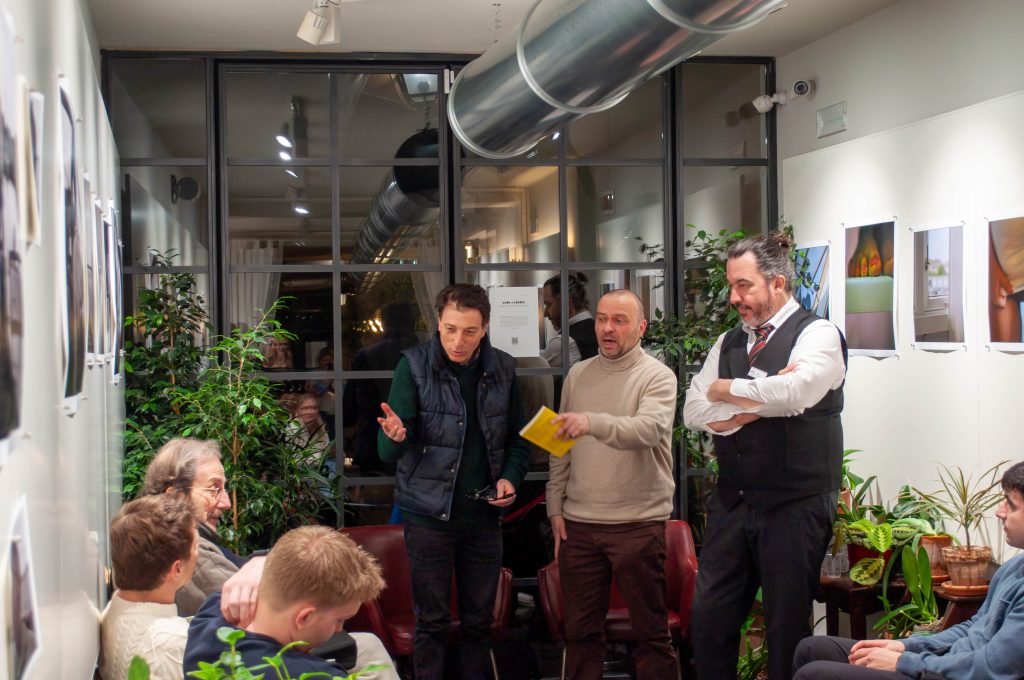
On the 3rd of February, 2026, a literary audience gathered at the Palazzi Community Center in Florence, Italy for the presentation of “Whodunit, Conte?”, a crime novel by Italian author Paolo Mugnai. Set in the Tuscan countryside during the summer of 1996, the novel opens with the murder of Countess Fiorenza Magrini in Poggesi, drawing readers into a mystery led by Cosimo Conte, a retired police inspector confronting both criminal puzzles and the limitations of old age. The event, moderated by journalist Edoardo Masciello, took the form of an in-depth conversation with the audience, allowing them to explore the creative process behind the novel, its recurring characters, and the broader themes that shape Mugnai’s work. Through a structured interview, the presentation offered insight not only into the plot of “Whodunit, Conte?” but also into the author’s personal motivations and literary influences.
The setting of Whodunit, Conte? is special for the author, Paolo Mugnai. The novel takes place in Tuscany in 1996, which was a personal choice for Mugnai. Not only is Tuscany a beautiful backdrop for a crime story, but it also has intricate ties to the author’s own identity. Mugnai explained that 1996 was significant because it was a time before modern technology completely transformed everyday life and criminal investigations. Since Tuscany is a close-knit social community where everyone knows everyone else’s business and gossip plays a major role. This location highlights the tension between the charm of Tuscany and the dark reality of the crime, which is especially effective in a novel about murder and mystery. Mugnai’s choice of time period and location helps shape the protagonist, Cosimo Conte, into a more relatable character. Mugnai wanted Conte to solve mysteries through life experience, not through fast paced action. Mugnai explained that Conte’s age limits him in many ways, including physical challenges and moments of doubt, however it also gives him wisdom and emotional depth. Lastly, Mungai clarified how Conte's true strength lies in his ability to observe people and understand their behavior. This quality shines through within the world Mugnai creates, making Conte a more realistic and compelling investigator rather than the typical fictional detective.
Mugnai demonstrates the community aspect throughout the story by explaining how everyone knows everyone and everyone's gossip. Gossip becomes a form of power. He noticed how the community interacts with one another and what lies can be shared within such a small community. During the book presentation, Mugnai and his friend, Edoardo Masciello, described all the characters to the audience to familiarize them with their importance to the story. Mugnai believes that literature should be passive. He enjoys seeing readers engage with the text and ask questions. Allowing people to engage with the story helps them feel like part of the story rather than just being a passive reader. As for the students in attendance, Mugnai thinks that interacting in Italian helps to connect more deeply with both the language and the narrative. The journalist who attended the event, demonstrated Mugnai's motive by explaining the characters and summary of the novel in Italian to the audience. The way the story is written with the characters allows the reader to create their own idea on the mystery and develop their own thoughts.
Sitting in on Paolo Mugnai’s reading allowed for a deeper appreciation of both the writing process and the purpose behind the novel. Whodunit, Conte? took about a year to write, with much more time spent refining it. He especially spent a lot of time balancing the mystery with meaningful character development. Hearing how the series allows the main character to grow, age, and reveal his past helped us understand the story as more than just a crime novel, but also about human motivation and personal philosophy. The author’s advice to focus on emotions and atmosphere rather than every word was especially impactful; a reminder that reading in a second language is about intuition and curiosity, not perfection.


Latest news
Attend AUF's 15th Annual Conference This December
The American University of Florence invites scholars, researchers & academics to submit proposals to speak at next Fall's academic conference
DEADLINE EXTENSION: Symbiosis In Health Call For Papers
The American University of Florence and Fairfield University seek speakers for new health and nutrition conference coming this winter