


Attendees, both in-person and online, get a glimpse of AUF’s dynamic, culturally immersive environment at Open Day on November 13 & 14, 2026
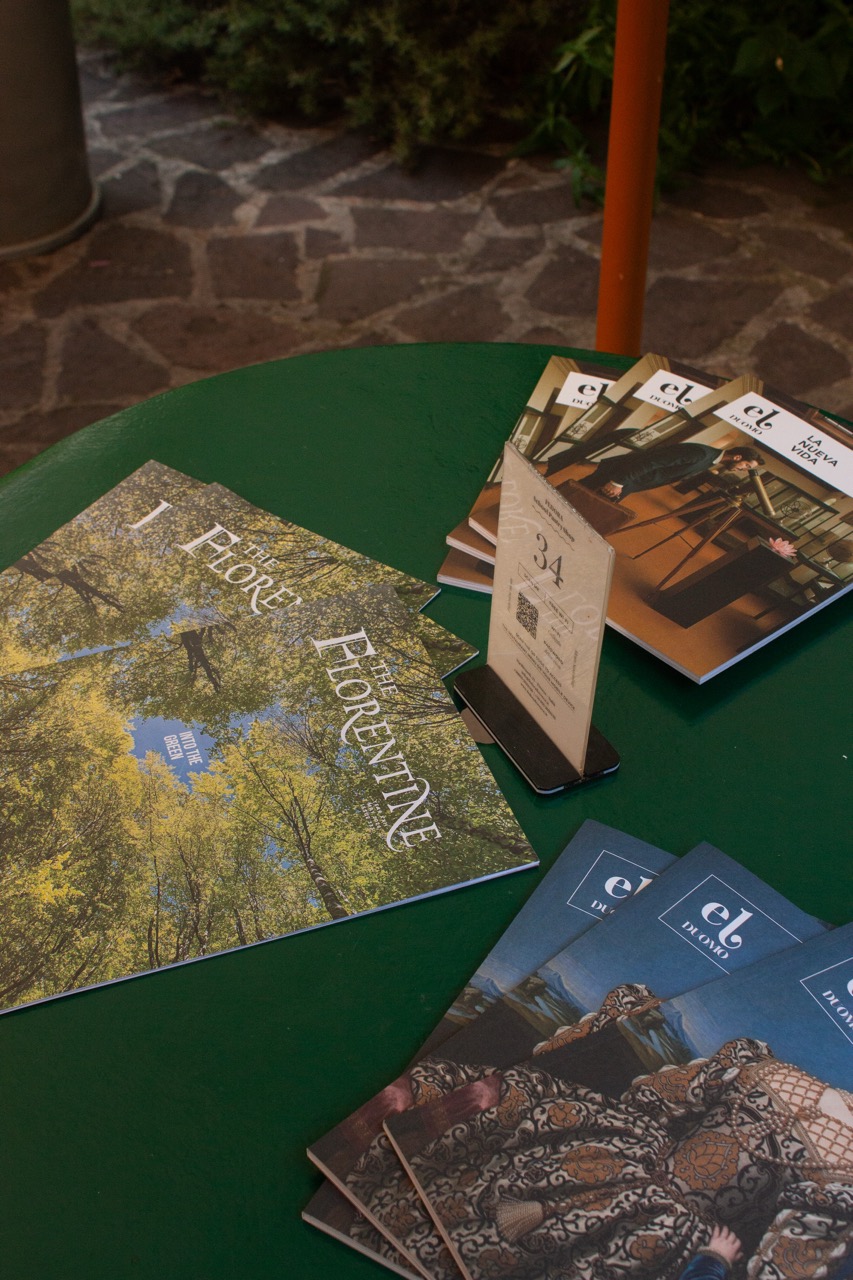
A Conversation Between El Duomo Magazine and The Florentine
The Palazzi Community Center Presents Made In Florence
written by Emma Desmond, Sabrina Zabalaga & Mossimo Infante-Meehan
What does it mean to truly experience Florence, rather than simply visiting it? That question set the tone for "Una chiacchierata tra El Duomo Magazine e The Florentine," a May 25 event featuring two of the city's most powerful editorial voices. More than just a media discussion, the topic delves into how storytelling, culture, and community influence how foreign audiences interact with Tuscany.
The event, held in an intimate and inviting atmosphere, allowed for an open debate between El Duomo Magazine and The Florentine, two publications that, in their own ways, serve as cultural bridges for non-Italian audiences navigating life in Florence. Francisco Jaén Martos, the founder of El Duomo Magazine, represented it, while Marco Badiani, the publisher of The Florentine, did the same.
They discussed how media's role is changing in a world where people are looking for significance, connection and authenticity rather than just superficial information. At the heart of the conversation was a mutual desire to convey a more authentic aspect of Florence.
Jaén Martos underlined that El Duomo Magazine is motivated by the desire to guide readers beyond the traditional tourist experience and into what he refers to as the "real Tuscany." Rather than focusing on popular attractions, the magazine emphasizes hidden jewels, local traditions and experiences that reflect the region's actual character. This philosophy has a deeper meaning than just material; it reflects a way of living.
The presenters frequently reiterated the idea that Florentine culture is based on human connection, appreciation for art and a strong feeling of community. As Jaén Martos mentioned, the purpose is not just to tell people where to go, but also to teach them how to enjoy a location in a more meaningful way. That approach is consistent with a larger shift in media today, in which people choose tailored, experience-driven content than generic recommendations.
The beginnings of El Duomo Magazine show the same organic, people-first approach. The concept originated in the Oltrarno district, where Jaén Martos collaborated with Catia Ballerini, a teacher who taught Italian to American pupils. A simple but informative question, where visitors could access reputable English-language news, uncovered a market gap.
That experience, paired with an interaction with a visitor seeking advice, created the concept for the magazine. In its early days, distribution was done by bicycle, which reflects both the founders' commitment and the project's grassroots ethos. As the topic went to strategy, Jaén Martos discussed how the magazine blends storytelling with practical value.
Instead of overloading readers with countless possibilities, El Duomo Magazine focuses on curated recommendations created by Florence residents. This enables the journal to serve not just as a storytelling platform, but also as a reliable reference for individuals considering relocating to or establishing a life in Tuscany.
Another major issue was the evolution of the brand itself. When asked if El Duomo Magazine is becoming more of a media brand or a community platform, the response was clear: both. While the editorial side continues to develop, there is a greater emphasis on instilling a sense of belonging among readers. The magazine uses channels such as Instagram, TikTok, YouTube and WhatsApp to foster ongoing conversations rather than one-way communication, transforming its audience into an active community.
Partnerships, particularly in the hospitality industry, are also vital in achieving this aim. Rather of viewing collaborations as solely promotional, Jaén Martos saw them as possibilities to extend the brand's personality into real-world situations. Working with venues and hospitality businesses that share similar principles allows El Duomo Magazine to organize events and experiences that seem connected, intentional and true.
Events like this one are an important component of that plan. As both Francisco Jaén Martos and Marco Badiani pointed out, in-person events foster actual human connection, which digital media cannot do. These events enable readers to interact directly with the individuals behind the content, ask questions and participate in a greater cultural debate.
In this approach, events are more than just a promotional tool; they are an organic extension of each publication's goal. The discussion also covered audience attention, notably for El Duomo Magazine. Jaén Martos stated that the goal is to become a prominent resource for Spanish speakers living in Florence, providing information that reflects their viewpoint while also engaging with the larger international community.
This emphasis on diversity demonstrates the growing significance of specialized audiences in today's media landscape. Marco Badiani provided a complementary viewpoint through The Florentine, Florence's longstanding and reliable English-language resource since 2005.
He underlined the necessity of offering both cultural and practical knowledge to international inhabitants so that they not only comprehend but also feel a part of the community. His contribution emphasized the idea that, when done correctly, media may serve as a bridge, linking individuals to a place in a way that is both accessible and meaningful.
Overall, the event was more than just a discussion on publishing; it was a reflection on how people interact with culture in an increasingly global world. It emphasized the value of authenticity, community, and deliberate storytelling by bringing together two opposing but complementary viewpoints. For those in attendance, the event provided a fresh perspective on Florence, not just as a visitor, but as a place to understand, explore, and live. In a city as deep and complicated as this one, an adjustment in perspective can make all the difference.
Latest news
Attend AUF's 15th Annual Conference This December
The American University of Florence invites scholars, researchers & academics to submit proposals to speak at next Fall's academic conference
DEADLINE EXTENSION: Symbiosis In Health Call For Papers
The American University of Florence and Fairfield University seek speakers for new health and nutrition conference coming this winter