


An interdisciplinary gathering in Florence will explore the links between nutrition, health, and community wellbeing.
AUF's 14th Annual Conference
Celebrating the Legacy of Material Media
Written by Linda Cheung & Jack Eckhart
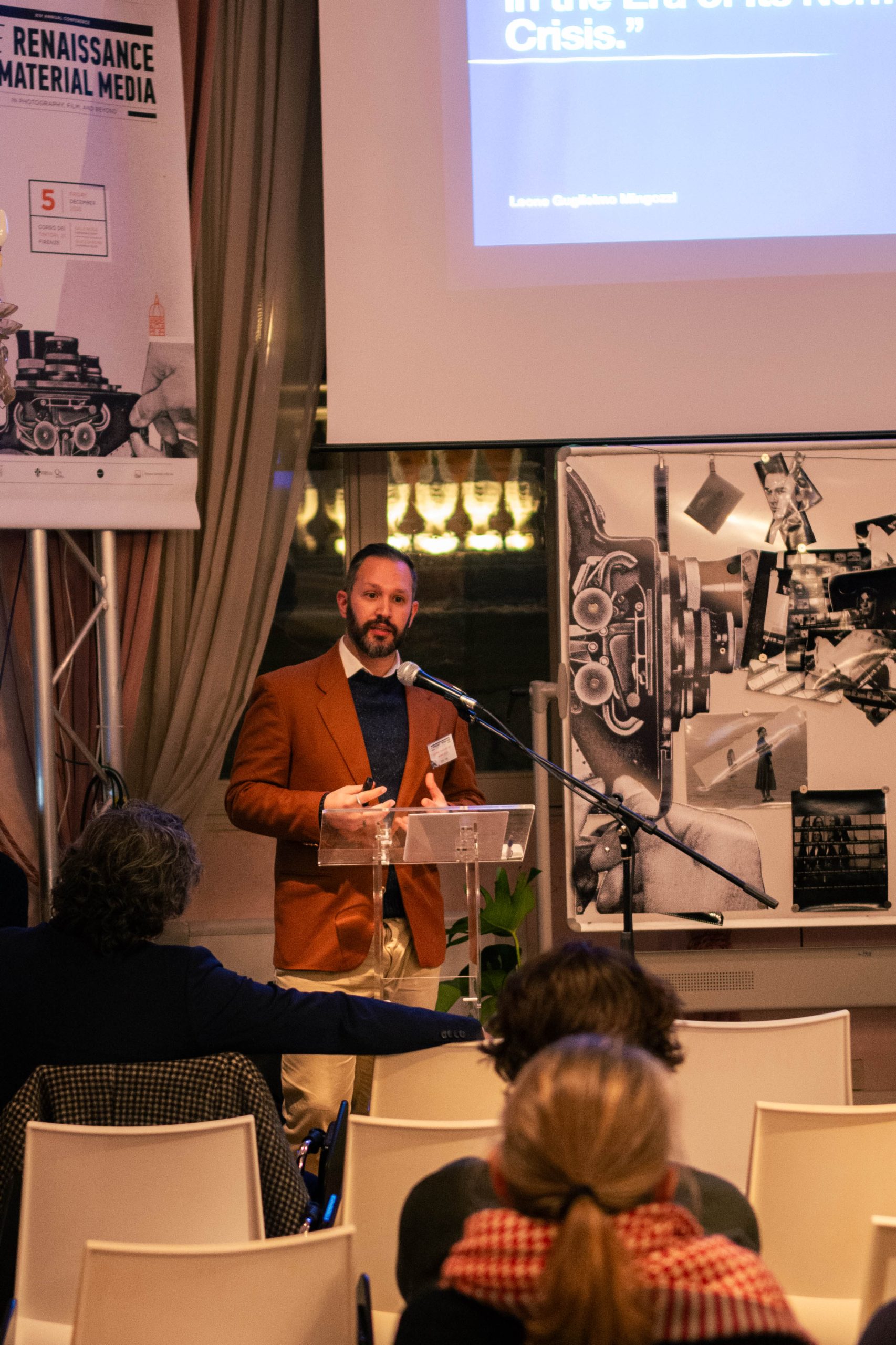
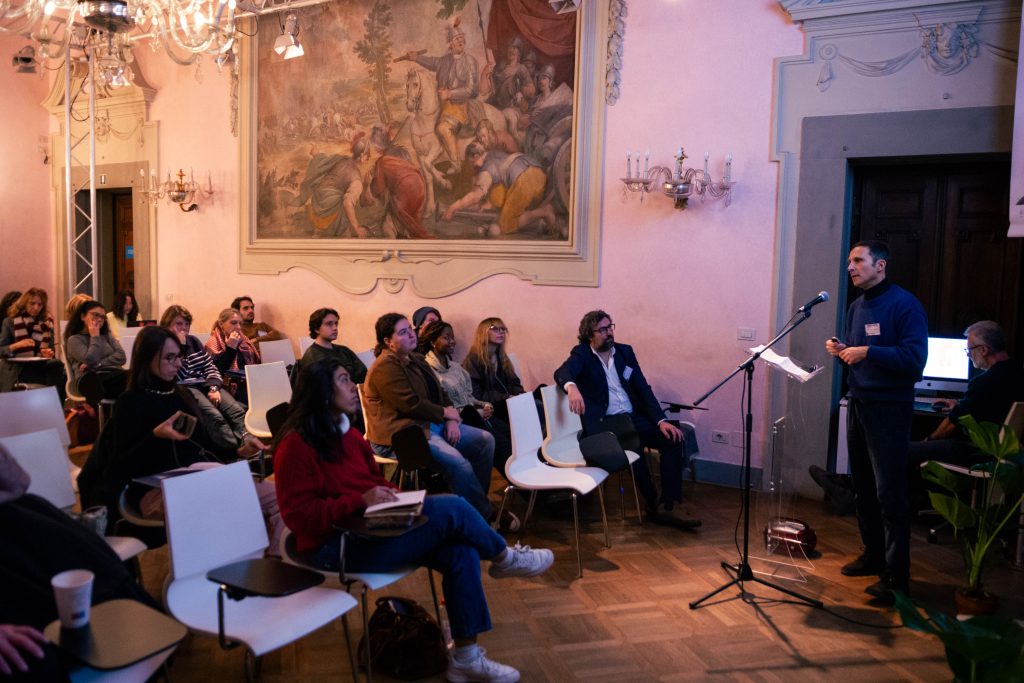
On December 5 2025, The American University of Florence hosted its annual academic conference. Academics from around the globe came to discuss this year’s theme: The Renaissance of Material Media. Scholars presented on a variety of topics, ranging from multimodal literature and film to photography and music. The conference began with opening remarks from Conference Coordinators Sofia Galli and Fabio Binarelli as well as the President of Quartiere 1, Mirco Rufilli.
“We started in the best way possible, we had these three [presentations] right away, and they were all different, connected by themes of writing and books,” Binarelli said. “Each presenter offered a different perspective and each one of them was so informative, illuminating.”
The first three lectures were presentations relating to multimodal literature. Sofia Galli presented her research discussing the different literary experiences in reading physical versus digital books. Nicoletta Salomon followed Galli’s presentation by discussing the benefits and outcomes of writing by hand versus other forms of note-taking such as typing. Salomon notes that hand writing helps students retain information through a better conceptual understanding of educational material. These outcomes are partially due to student’s need to summarize information in more concise and simpler explanations because of the slower process of hand-writing in comparison to typing.
Mandragora CEO Vincenzo Curia concluded the first session of presentations by discussing his family’s publishing company and its relation to society’s current demand for e-books. Curia emphasized his company’s focus on a high-quality, multi-sensorial experience in navigating physical books, while also addressing the ways in which Mandragora caters to an increasingly digitally-minded readership.
“The main capability that a company must have is to be adaptable,” Curia said. “When it comes to new tech or the digital, we always embrace the newest possibility. Right now, we have one of the best, here in Florence with our publisher. He has a Komori, which is a Japanese machine, and they are all with ink that is not as polluting as it was before. We try to maintain the highest appreciation towards first, of course, the word, but in general, the material that we need to use, and the latter, the disposal of it.”
The conference also focused on the important role that film has played in this current resurgence of material media. Professor and director Nora Ferrucci presented on the importance of stop motion. She took attendees through a comprehensive history of the medium, and broke down how stop-motion has slowly been replaced by CGI while also highlighting examples of stop-motion being used in contemporary cinema.
“I think that's the idea to make some of the story that I have in my mind,” Ferrucci said. “Generate ideas and also to transmit what is the movement that they have in mind. I picture a moment in my mind, then I have to translate to my body to understand each, every little, tiny, tiny steps to get rid of that moment. And then I have to transmit to the puppet, so it's like making something magic.”
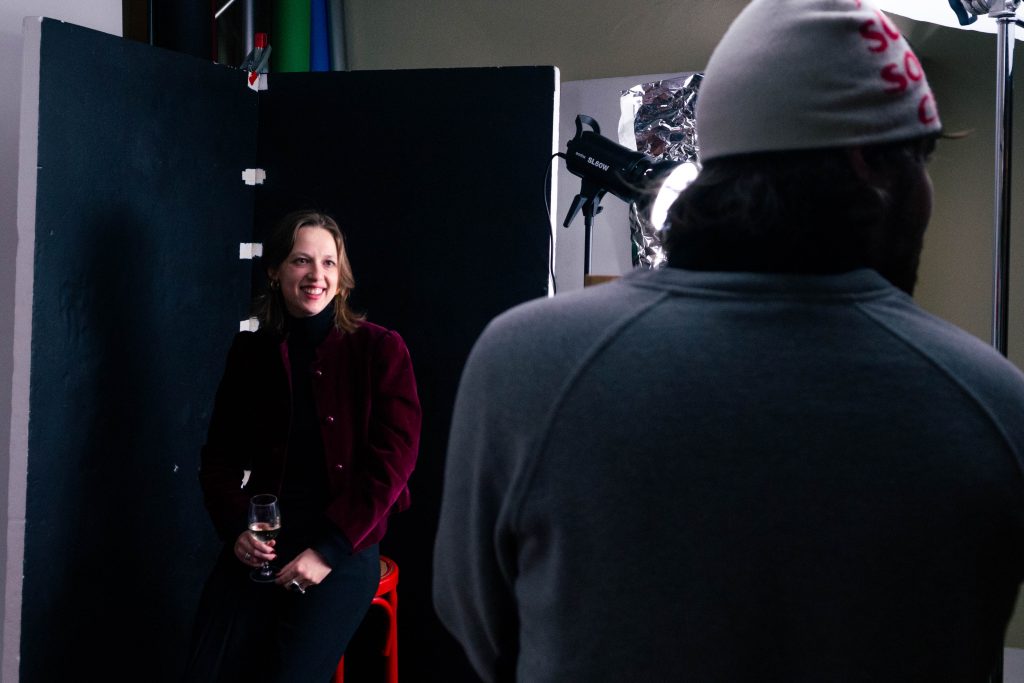
After the first coffee break, Brian Michael Goss, professor of Saint Louis University in Madrid, presented his research relating to the history of film. The presentation discussed the advent and introduction of sound in films as well as societal reactions toward these emerging technologies. Goss’ presentation addressed new opportunities and challenges from the transition of the silent film era to the sound era, such as certain actors or actresses whose career subsequently declined following the introduction of sound into film.
Audiences may draw similar parallels of this period to technological and societal challenges related to our current moment, such as the ways in which Artificial Intelligence has had profound impacts across industries including film. AI has had such significant impacts in the film industry that the most recent SAG-AFTRA contract included an Interactive Media Agreement– a provision in the contract protecting member rights to their name, voice and likeness. Artificial Intelligence has also had profound impacts relating to copyright and other art forms.
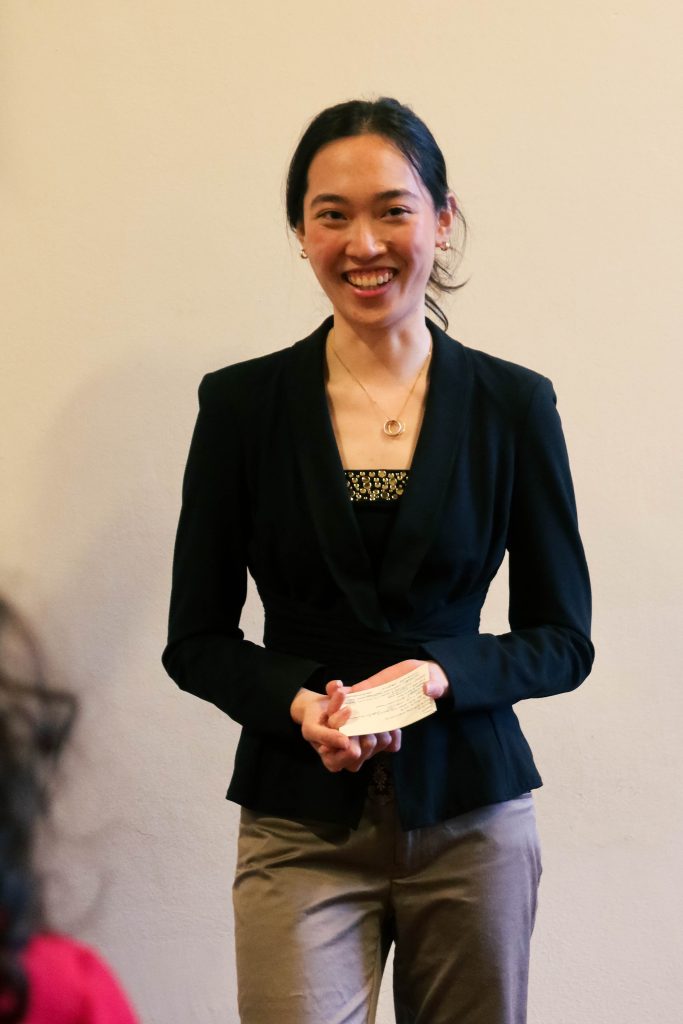
Rebbeca Zhang is a student from Stony Brook University who is currently researching how AI interacts and understands artwork. Zhang presented on the relationship between AI and art, explaining how AI consistently fails to meaningfully engage with artwork. She cited the software's inability to create, identify or analyze artwork– something she believes AI will never be able to replicate.
“I don't love using AI and art because we know there are some problems with it,” Zhang said. “We are trying to teach AI how to understand art, and when AI can actually understand art, maybe they are able to do something different instead of just taking pieces from artists.”
Alessandro Calonego, a professor and graphic designer for AUF led a presentation about the evolution of design and music. During his presentation, Calonego brought the audience through the evolution of music design, spanning cassette players to Spotify, in an attempt to examine whether or not form follows function in musical design. Through providing attendees with examples such as the volume control button on the walkman to illustrate how form meets function, Calonego believes that function reigns supreme in design.
“I'm a designer, so I always start from function,” Calonego said. “The only lesson I learned while studying is that, okay, if you are an artist, you can start from the form. Because you can have a form in your mind and it's good if you follow the form. But if you are a designer, also if you are a visual designer, communication designer, you must always start from the function. And the more you are able to detect shapes and advices that comes from the function, the more you are a good designer.”
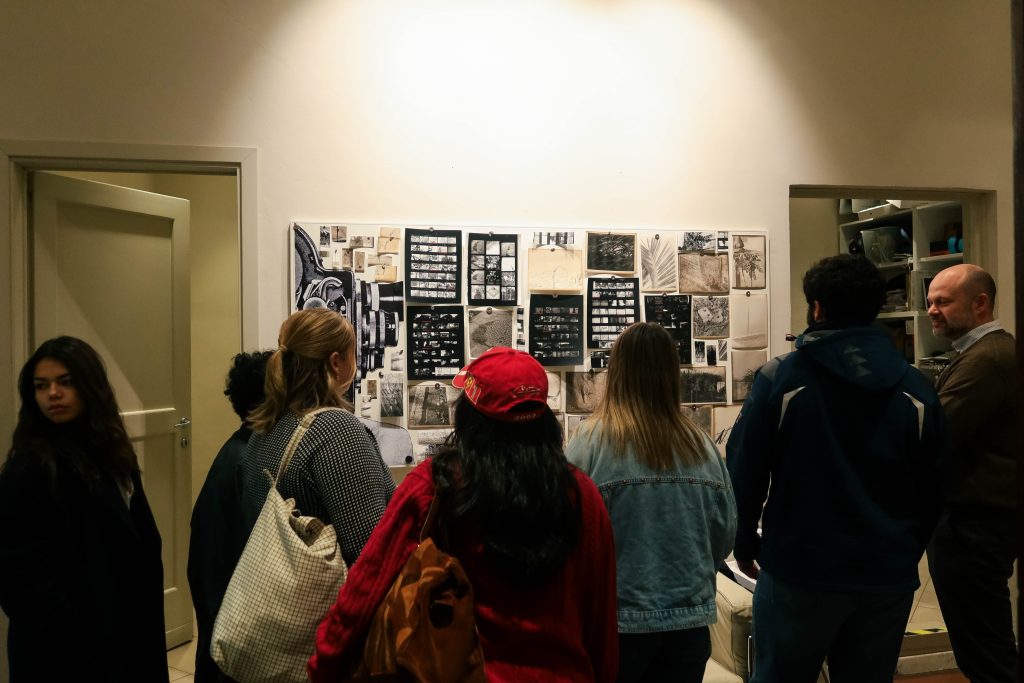
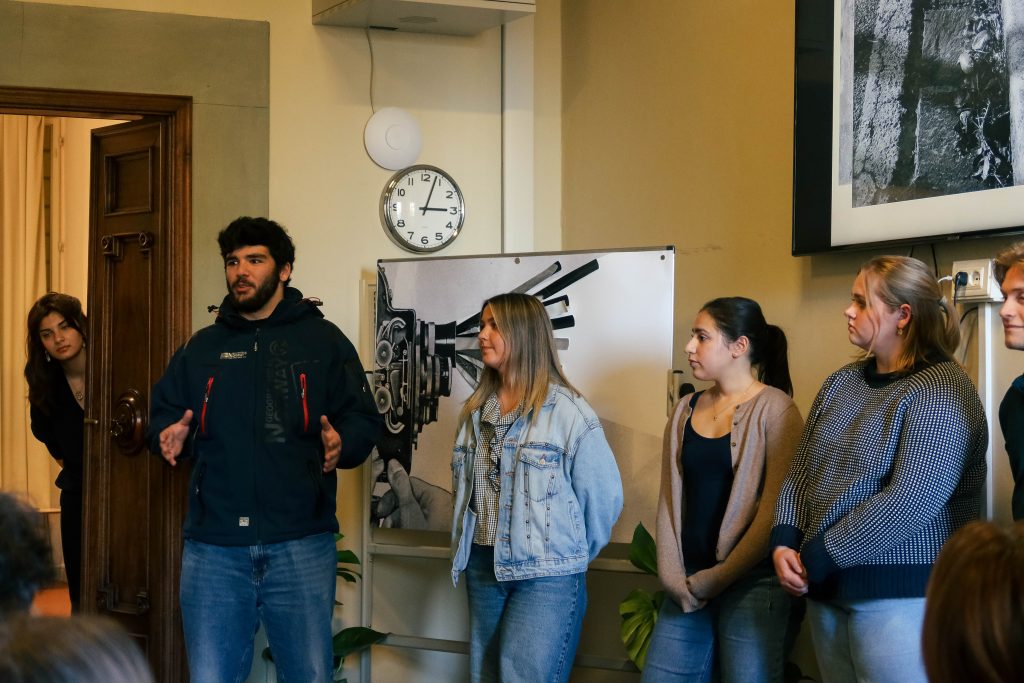
Many departments from across The American University of Florence worked to plan the logistics of the conference. While students from the film and communications courses worked to publicize the conference, students from the Apicius School of Hospitality worked together to cater coffee breaks and lunch on the day, including a series of film-inspired pralines created by the chocolate department.
“It was great fun,” Apicius student Joseph Dreksler said. “We were given guidance from our chef, and he helped us come up with the concepts.”
Ultimately, many scholars, students, and coordinators collaborated to host a successful conference. Professors and researchers had the opportunity to present pioneering research related to the resurgence in popularity of analog media. The annual academic conference continues to serve as a place to bridge connections across countries and contribute pioneering research to emerging fields.
Latest news
The American Degree, Reimagined Abroad
Recognition from New England Commission of Higher Education (NECHE) brings U.S.-standard education to international classrooms.
Whodunit, Conte?
A Palazzi Community Center Book Presentation: Whodunit Conte, presented by The American University of Florence